

I have heard a lot of stories from my dad and grandmom growing up. Later as I grew up, I found my love back for reading after a library opened up just opposite our house. Back then, the monthly rental was just Rs.10 and we could borrow any number of books – just give one back and get another.
It was during this time that I read a lot of Panchatantra stories, especially in magazines like Tinkle or Champak. And, this story of the monkey and the crocodile teaches us that some friendships are born out of kindness. But not every friend deserves your trust.
The story of the Monkey and the Crocodile, is one of the most beloved tales from the Panchatantra. The story telling is wrapped in the beautiful imagery of a river, a jamun tree, and a dangerous bargain.
Let’s dive into this timeless tale now.
The Story: The Monkey and the Crocodile
A Sweet Beginning
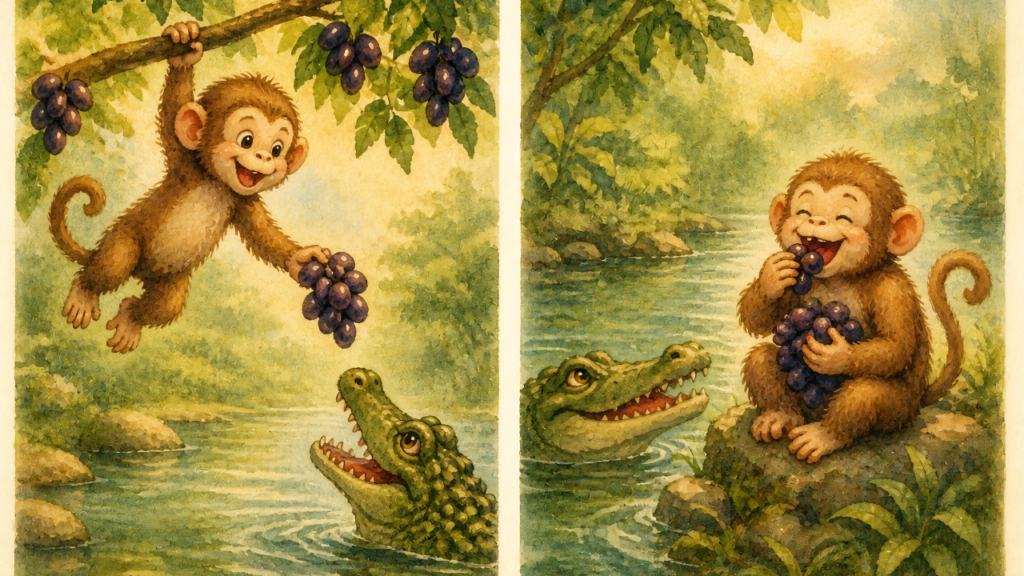
On the banks of a wide, glistening river stood a tall jamun tree, heavy with sweet, dark fruit. In this tree lived a clever and cheerful monkey. He spent his days leaping between branches, feasting on jamuns, and watching the world drift by on the current below.
One day, a crocodile swam up to the base of the tree, looking tired and hungry. The generous monkey, without a second thought, tossed handfuls of ripe jamuns into the water. The crocodile ate them gratefully, and the two struck up an unlikely conversation.
Day after day, the crocodile returned. And day after day, the monkey shared his fruits. A warm friendship blossomed between them — the kind that feels effortless and true.
A Wife’s Dangerous Craving
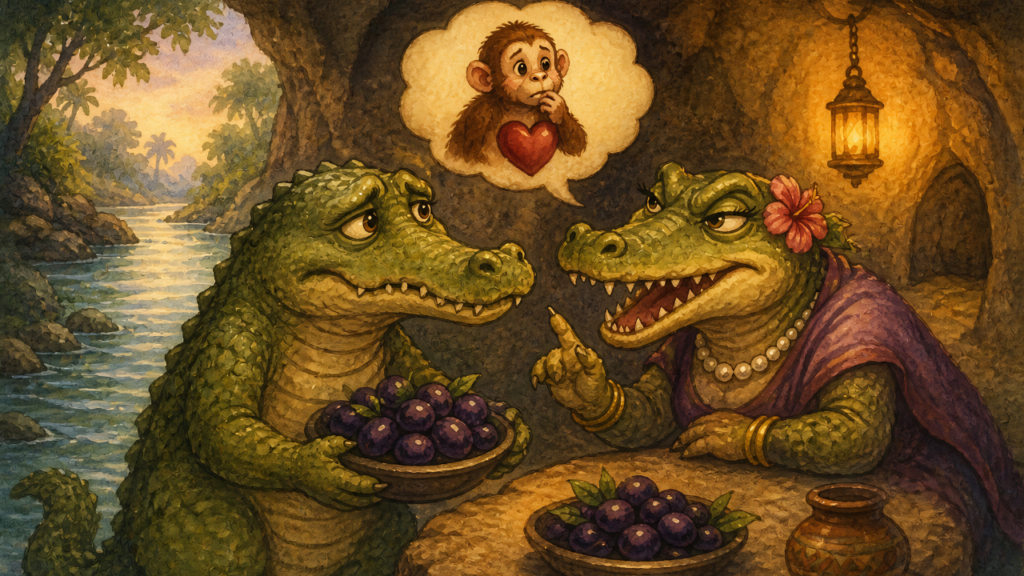
One evening, the crocodile brought home a bundle of jamuns for his wife. She loved them. But then she said something that chilled the river water around her.
“If the fruit of this tree is so sweet,” she mused, “imagine how sweet the heart of the monkey must be — one who has eaten this fruit his whole life. Bring me his heart. I want to eat it.”
The crocodile was torn. This was his friend — his only true friend. But his wife persisted, and eventually, the crocodile gave in. He decided to trick the monkey.
The Treacherous Invitation
The next day, the crocodile swam to the tree with a warm smile. “My friend,” he said, “my wife would love to meet you. Please come to our home across the river. She has prepared a feast in your honour.”
The monkey was delighted. He had never met his friend’s wife. Trusting the crocodile completely, he jumped onto his broad back, and they set off across the river.
But as they reached the middle of the deep river — far from any shore — the crocodile began to sink slowly. “Friend,” he said, with a heavy voice, “I must confess. My wife wants to eat your heart. That is why I brought you here. I am sorry.”
Wit Over Fear
The monkey’s heart pounded. He was in the middle of a river, on the back of a crocodile, with no escape in sight. But instead of panicking, he thought quickly.
“Oh dear!” said the monkey, slapping his forehead. “Why didn’t you tell me earlier? I left my heart back on the tree! Monkeys always leave their hearts at home when they go out. If your wife wants my heart, you’ll have to take me back so I can fetch it.”
The foolish crocodile believed him and turned back toward the tree. The moment they reached the bank, the monkey leapt off and scrambled to the highest branch.
“You fool!” the monkey called down. “No creature leaves its heart behind. You have betrayed a true friend. I shared my food with you every day. And this is how you repay me? Go home — and never return.”
The Moral of the Story
While writing this story for this blog, I realized that these stories are not just for children, they are good for adults too. This made me think – don’t we come across people in our lives who are like the crocodile in the story?
I think this tale carries more than one lesson, which is why it has endured for thousands of years:
- Wit and presence of mind can save you when strength cannot.
- Not everyone who smiles at you is your well-wisher.
- Greed can corrupt even the most genuine bonds.
- A true friend would never put you in harm’s way.
Why This Story Still Matters Today
Written over 2,000 years ago as part of Vishnu Sharma’s Panchatantra, this story was originally crafted to teach young princes the art of wise governance and discerning friendship. But its wisdom is just as relevant today.
How often do we trust people blindly, simply because they have been kind to us once? How often does someone else’s greed come in the way of a friendship?
And how often does a calm, quick mind save us from situations where panic would only make things worse?
The monkey does not hate the crocodile. He does not rage or cry. He simply uses his wits, removes himself from danger, and then draws a firm boundary. That, perhaps, is the deepest lesson of all.
About the Panchatantra
The Panchatantra is one of the oldest collections of fables in the world, believed to have been composed in Sanskrit around 300 BCE. It is divided into five books, each exploring a different theme of human wisdom — from winning friends and making alliances to knowing when to walk away.
The stories are not merely for children — they were originally written as a ‘mirror for princes’, a guide for young rulers learning how to navigate a complex world. And yet, their simplicity and warmth have made them a favourite for generations of parents and children alike.
Read More Panchatantra Tales
If you enjoyed this story, here are more Panchatantra tales waiting for you on Fables n Tales:
- The Lion and the Hare — How brains always beat brawn
- The Blue Jackal — A cautionary tale about pretending to be someone you are not
- The Tortoise and the Two Geese — Why talking too much can cost you everything
Did you like this story? Share it with someone who loves Indian folklore. And don’t forget to explore more tales from our Panchatantra collection!