

Growing up, I always knew Shanta as a character mentioned briefly in passing during family discussions about the Ramayana. It wasn’t until recently, while exploring regional traditions, that I discovered her footprint isn’t just trapped in text, but it is physically preserved across opposing ends of India.
There is a saying in Indian tradition: where a temple stands, a story lives. Temples are not merely places of worship, they are memory made of stone, evidence that a story was considered too important to be left to words alone.
The story of Shanta, the firstborn daughter of Dasharatha and elder sister of Rama barely appears in the main Valmiki Ramayana. And yet two ancient temples dedicated to her and her husband, the sage Rishyasringa, stand at opposite ends of India. One in the mountains of Himachal Pradesh. One in the forests of Karnataka.
When temples endure, the story they hold is real. This post is about those temples and what they tell us.
If you haven’t read the full story of Shanta yet, you can read it here first: Shanta — The Forgotten Daughter of Dasharatha and Rama’s Elder Sister.
Temple 1 — Shringa Rishi Temple, Banjar Valley, Kullu, Himachal Pradesh
Where It Is
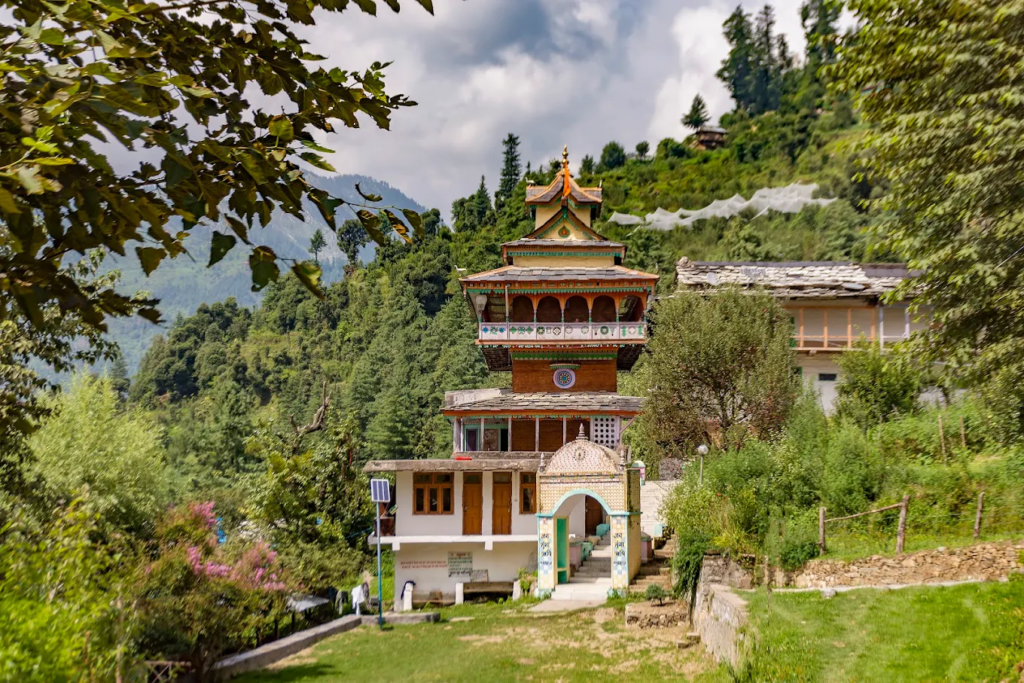
About 60 kilometres from Kullu town, deep in the Banjar Valley of the Kullu district, sits the Shringa Rishi Temple in a village called Baggi. The valley is remote and peaceful, the kind of place that feels untouched by the rush of the modern world and the temple sits within it with the quiet permanence of something that has always been there.
Rishyasringa, known locally as Shringa Rishi or Skirni Deo is the presiding deity of the entire Banjar Valley. He is considered one of the eighteen chief deities of the Kullu district, a remarkable position for a figure so little known in the mainstream Ramayana tradition.
What the Temple Houses
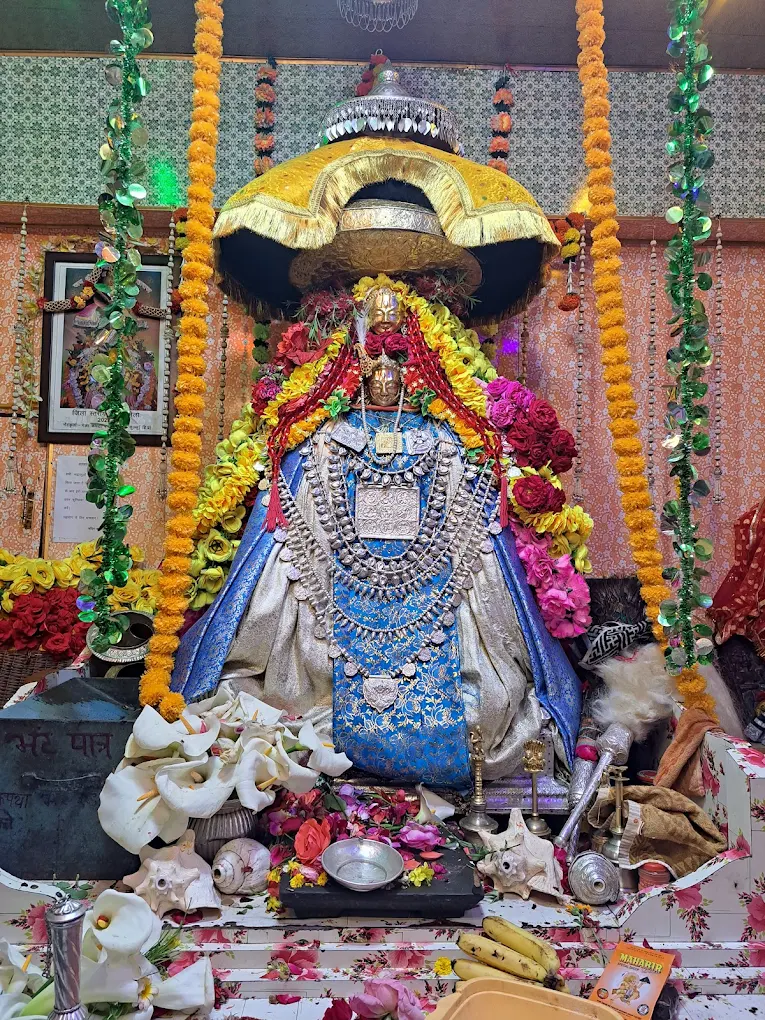
Inside the temple, both Rishyasringa and Shanta are enshrined together — their idols side by side, worshipped as a divine couple. This detail matters: Shanta is not a secondary figure here, a footnote beside a more famous husband. She is worshipped as Mata Shanta, a goddess in her own right, honoured alongside her husband as the daughter of Dasharatha who made possible the birth of Rama.
The temple has typical Himachali architecture, the distinctive wooden construction and tiered roofline style that characterises the sacred spaces of the Kullu and Manali valleys. It was reconstructed in 2008 but occupies an ancient site whose religious significance stretches back to the Ramayana era.
A Living Lineage
What makes this temple extraordinary is not just its age but the fact that the story it holds is still alive in the people around it. The descendants of Shanta and Rishyasringa are believed to be the Brahmins of Rajasthan known as Shringi or Sukhwal Brahmins. These are the communities that trace their ancestry directly to this sage and princess. There is also a sect of Sengar Rajputs who call themselves the only Rishivanshi Rajputs, tracing their lineage to Rishyasringa and Mata Shanta.
These are not mythological claims made in texts alone. These are living communities whose identity is rooted in this story, which is perhaps the most compelling evidence of all that Shanta was not an invention but a historical and sacred memory.
How to Visit
The nearest major town is Kullu, well connected by road from Chandigarh (252 km), Shimla (200 km), and Delhi (510 km). The nearest airport is Bhuntar, approximately 10 km from Kullu. From Kullu, Banjar is about 60 km by road through some of the most beautiful mountain scenery in Himachal Pradesh. The temple is most accessible in the warmer months — the valley becomes difficult to reach in the heavy winter season.
Temple 2 — Rishyashringeshwara Temple, Kigga, near Sringeri, Karnataka
Where It Is
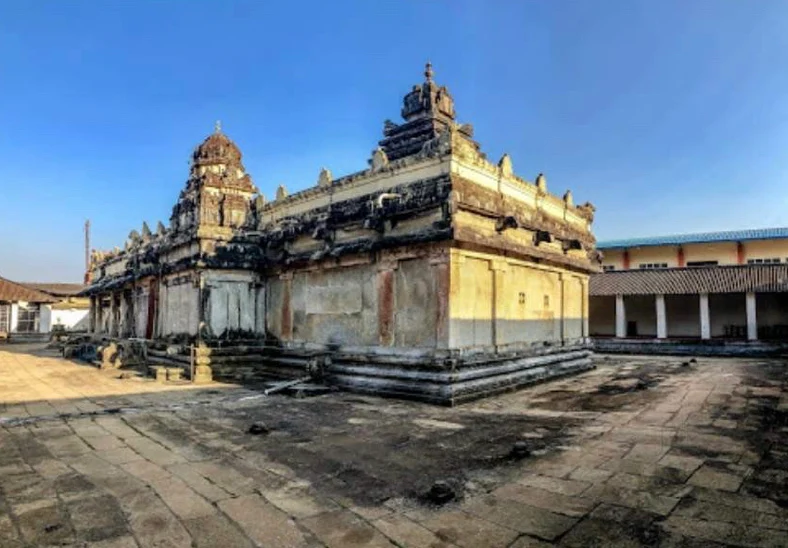
About 9 to 10 kilometres from the sacred town of Sringeri in Chikmagalur district, Karnataka, lies the small village of Kigga on the banks of the Nandini River — a tributary of the Tunga. Here stands the Rishyashringeshwara Temple, one of the oldest temples in Karnataka, surrounded by the dense forests of the Western Ghats.
The connection between Sringeri and Rishyasringa is not incidental — it is etymological. The very name Sringeri derives from Rishyashringa-giri, meaning the hill where Rishyasringa resided. According to the Tungabhadra Mahatmya, a division of a Mahapurana, Rishyasringa was born and raised near this very location. When Adi Shankaracharya chose this place to establish the first of his four great mathas, he was building on ground already made sacred by Rishyasringa’s presence.
The Shiva Linga With a Horn
At the heart of the Kigga temple is one of the most extraordinary sacred objects in all of Indian temple tradition — a Shiva Linga with a distinctive protrusion, resembling a horn, on its surface.
The story behind it is this: when Rishyasringa’s time on earth was complete, witnesses saw a brilliant streak of light emerge from his body and merge directly into the Shiva Linga he had been devotedly worshipping throughout his life. The horn on the Linga is understood to be the physical imprint of that merger — the mark of the deer-horned sage absorbed into the divine.
This Linga was worshipped first by Rishyasringa’s father Vibhandaka, and then by Rishyasringa himself. It can be seen at the temple today. The Jagadguru Shankaracharya of the Sringeri Peetham performs puja at this Linga personally — a tradition that connects India’s greatest Advaita philosopher to a story from the Ramayana through an unbroken line of sacred practice.
The Temple and Its Beliefs
The Rishyashringeshwara temple was built during the Vijayanagara period and its antiquity is attested by inscriptions from the 7th century CE which refer to the deity as Kilganeshwara or Kilganadeva — the lord of Kilga, the earlier name of the village Kigga.
The belief associated with the temple is striking: those who properly worship at this temple will be protected from famine for a distance of 12 yojanas in all directions. This is a direct echo of Rishyasringa’s power — the sage whose feet brought rain to drought-stricken Anga, and whose presence is still understood here as a force against scarcity.
Shanta at Kigga
At Kigga, Shanta is worshipped as Sri Shantambika — Shantamba — alongside Rishyasringa. The Sringeri Sharada Peetham records that around a hundred years ago, the Kigga region faced severe hardships, and the devout residents prayed to the then 34th Jagadguru of the Sharada Peetham. The consecration of Sri Shantambika was performed, and the centenary of that consecration has been observed with special ceremonies — including the Brahma Kalashabhishekam performed by the current Jagadguru.
How to Visit
Kigga is about 9 km from Sringeri and 65 km from Chikmagalur. Sringeri is well connected by road from Bangalore (approximately 340 km), Mangalore (100 km), and Hassan (100 km). The temple’s main festival, Rathotsavam, is conducted in Chaitra Masa (March or April) and is the best time to visit. The area is also the starting point for the Narasimha Parvata trek and the beautiful Sirimane Falls is about 5 km away — making this an ideal destination for those combining pilgrimage with the natural beauty of the Western Ghats.
Two Temples, One Story — What They Tell Us
What is remarkable about these two temples is how far apart they are — one in the Himalayas of Himachal Pradesh, one in the forests of Karnataka — and how completely they tell the same story. The same couple. The same narrative. The same sacred reverence for a woman whose name barely appears in the most widely read version of the Ramayana.
This geographical spread is itself a form of evidence. Stories that survive in temple worship across two such distant regions, in entirely different cultural traditions, are not invented. They are remembered. They survive because they were considered too important to lose.
The temples of Shanta and Rishyasringa are proof that even when a story is set aside by the dominant text, it lives on in the places and people who refuse to forget it.
Read More
Continue exploring on Fables n Tales:
Did this post make you want to visit Kullu or Kigga? Share it with someone who loves India’s temple heritage — and explore more Indian Temple Tales right here on Fables n Tales.
Sources & Canonical References
The historical and geographical context explored in this guide is mapped from traditional scriptures and regional temple records:
Scriptural Background: Valmiki Ramayana, Bala Kanda (detailing the Putrakameshti Yajna and the role of Sage Rishyasringa).
Puranic References: The “Tungabhadra Mahatmya” chapter of the Skanda Purana (detailing the birth and stay of Rishyasringa near the Tunga river).
Local Chronicles: Historical records preserved by the Sringeri Sharada Peetham (regarding the consecration of Sri Shantambika at Kigga) and oral folklore histories maintained by the Kullu Devta committee.